

The future development trends of PVB interlayer exhibit characteristics of diversification and technological innovation.
Accelerating Localisation Process: For a long time, global giants have dominated the domestic PVB interlayer market with their technological advantages. However, as local enterprises continue to master the production technology of PVB resin and interlayer, domestic companies have begun to produce high-quality PVB interlayers, accelerating the localisation process. Previously, due to technological and material limitations, local enterprises mainly relied on recycled materials to compete in the low-end market. Now, a few domestic companies, leveraging cost advantages and technological innovations, have successfully produced high-quality PVB interlayers with market competitiveness.
Expanding from Basic to Functional Types: Traditional PVB interlayers are primarily used for safety purposes, but their applications are expanding towards functional uses, including heat insulation, sound insulation, and multifunctional films. Heat insulation films effectively block infrared rays and are widely used in building and automotive glass to reduce air conditioning usage and enhance comfort; sound insulation films reduce noise through special structures, enhancing tranquility inside buildings and vehicles.
Growing Demand for PV-Grade PVB Interlayers: Due to their high light transmittance, anti-aging properties, and low electrical resistance, PV-grade PVB interlayers are gradually becoming the preferred choice for PV module encapsulation. Previously constrained by process and cost limitations, the application scope of this product was limited. However, with improvements in double-glass module processes and reductions in production costs, market demand has steadily increased, driving its application in larger-scale PV module production.
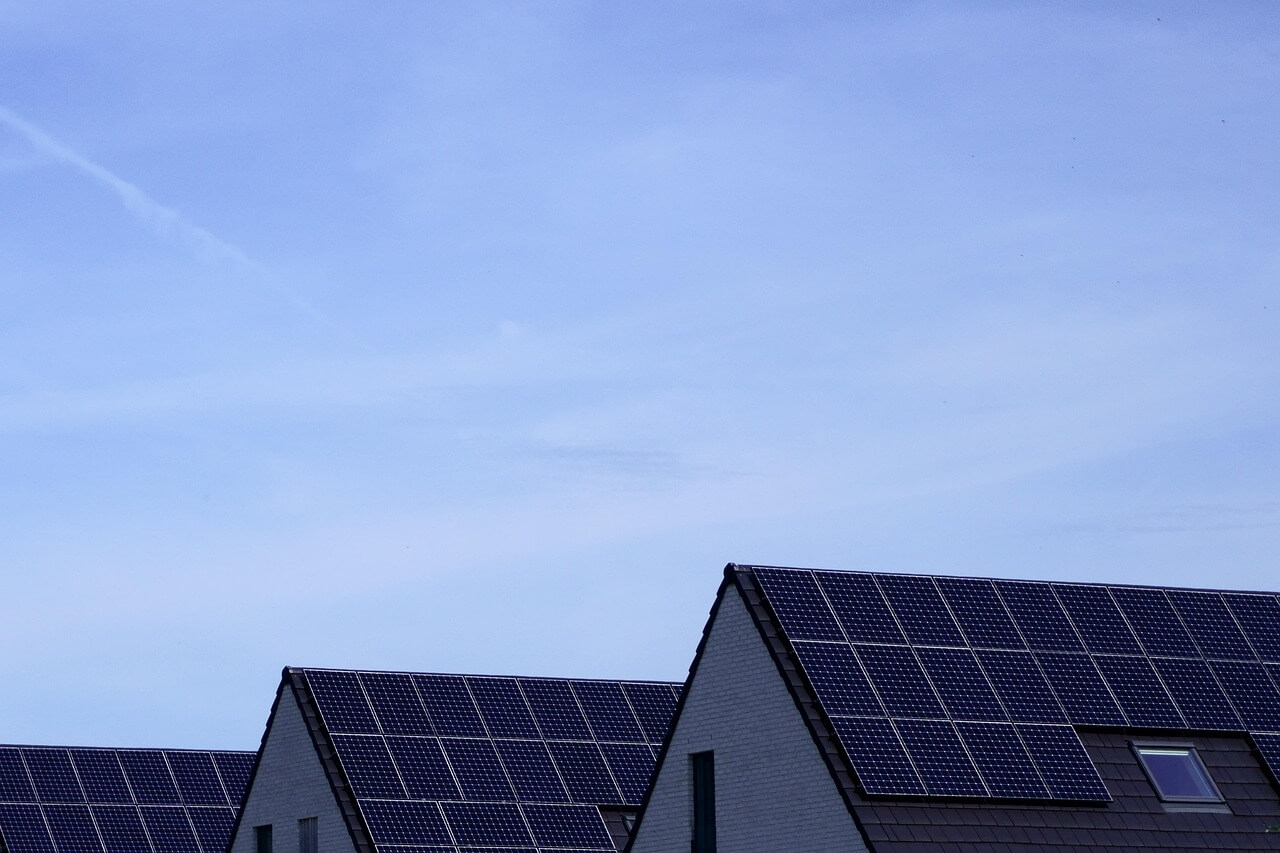
Overall, the continuous advancement of PVB interlayer technology and the increasing market demand will drive its development in multiple fields, such as Building Integrated Photovoltaics (BIPV). BIPV represents the perfect combination of PV and architecture, serving as part of the building's external structure, providing both power generation and aesthetic enhancement.
In solar glass modules, PVB encapsulation films have several advantages over EVA films: longer service life, higher sag resistance, superior safety performance, and long-term stability. The thermoplastic and non-crosslinking characteristics of PVB films enable them to provide higher penetration resistance and post-breakage performance in PV buildings, meeting the higher requirements for PV films in BIPV applications. Therefore, in building applications, PVB films will gradually replace EVA films as the preferred choice.
Future Development of PVB Interlayer: Accelerating Localisation and Functional Diversification to Drive New Market Dynamics [SMM Analysis]
The future development trends of PVB interlayer exhibit characteristics of diversification and technological innovation.
Data Source Statement: Except for publicly available information, all other data are processed by SMM based on publicly available information, market communication, and relying on SMM‘s internal database model. They are for reference only and do not constitute decision-making recommendations.
For any inquiries or to learn more information, please contact: lemonzhao@smm.cn
For more information on how to access our research reports, please contact:service.en@smm.cn
Related News
18 hours ago
China Approves 17.44 GW Power Plan for Qaidam Desert Base, Including Solar, Wind, and Energy Storage Projects
Read More
China Approves 17.44 GW Power Plan for Qaidam Desert Base, Including Solar, Wind, and Energy Storage Projects
It is understood that the National Energy Administration has officially approved the power source allocation plan for the "Qaidam Desert Base (East Golmud) Base". The planned construction scale of the power source projects at this base is 17.44 million kilowatts, including 10 million kilowatts of photovoltaic power, 5 million kilowatts of wind power, 2.64 million kilowatts of coal-fired power, 0.1 million kilowatts of solar thermal power, and 1.5 million kilowatts (for 4 hours) of electrochemical energy storage. The total investment in the projects is about 86 billion yuan. The new energy will be transmitted to Guangxi through the "Qinghai-Guangxi DC" UHV power transmission project. Currently, significant progress has been made in the preliminary work of the "Qinghai-Guangxi DC" project, w
18 hours ago
![[SMM PV News] Armenia Hits 1.1 GW Solar Capacity,](https://imgqn.smm.cn/usercenter/qQwIB20251217171741.jpg)
Feb 6, 2026 09:17
[SMM PV News] Armenia Hits 1.1 GW Solar Capacity,
Read More
[SMM PV News] Armenia Hits 1.1 GW Solar Capacity,
Armenia’s cumulative solar capacity has surged to 1.1 GW following the addition of approximately 615 MW in 2025. This rapid expansion has pushed solar's share of electricity generation to around 15%, effectively meeting the country's 2030 target years ahead of schedule. The growth is heavily driven by a net-metering scheme supporting over 50,000 autonomous producers (totaling 650 MW), though the government ended loan subsidies for rooftop solar in July to shift focus toward battery storage.
Feb 6, 2026 09:17
![Spot Market and Domestic Inventory Brief Review (February 5, 2026) [SMM Silver Market Weekly Review]](https://imgqn.smm.cn/usercenter/tSwaX20251217171735.jpg)
Feb 5, 2026 17:36
Spot Market and Domestic Inventory Brief Review (February 5, 2026) [SMM Silver Market Weekly Review]
Read More
Spot Market and Domestic Inventory Brief Review (February 5, 2026) [SMM Silver Market Weekly Review]
Feb 5, 2026 17:36
Related News
China Approves 17.44 GW Power Plan for Qaidam Desert Base, Including Solar, Wind, and Energy Storage Projects
Feb 07, 2026 20:46
[SMM PV News] Armenia Hits 1.1 GW Solar Capacity,
Feb 06, 2026 09:17
Spot Market and Domestic Inventory Brief Review (February 5, 2026) [SMM Silver Market Weekly Review]
Feb 05, 2026 17:36

Silver Market Price Review and Expectations Brief Commentary (February 5, 2026) [SMM Silver Market Weekly Review]
Feb 05, 2026 17:33